
Five Minutes with... Melvin Josy
Melvin is interested in how domestic objects can hold meaning—how form, material, ornament, and movement can give them a presence beyond their practical purpose. The elaborate ritual craft of Theyyam and the visual language of Hindu temple sculpture have shaped his interest in ornament as a means of creating presence. Across the series, familiar forms become vessels for memory, symbolism, and play. Tactile materials, woven elements, unexpected details, sound, light, and movement disrupt the stillness of functional objects, inviting interaction rather than simply observation.
Can you introduce yourself and your practice?
I'm Melvin Josy, a Melbourne-based designer and maker originally from Kerala, India. My practice explores the intersection of narrative, craft, and material experimentation. I'm interested in how objects can carry meaning beyond their immediate form and function, drawing on personal experiences and cross-cultural references to create pieces with deep emotional resonance.
What inspired this series of work?
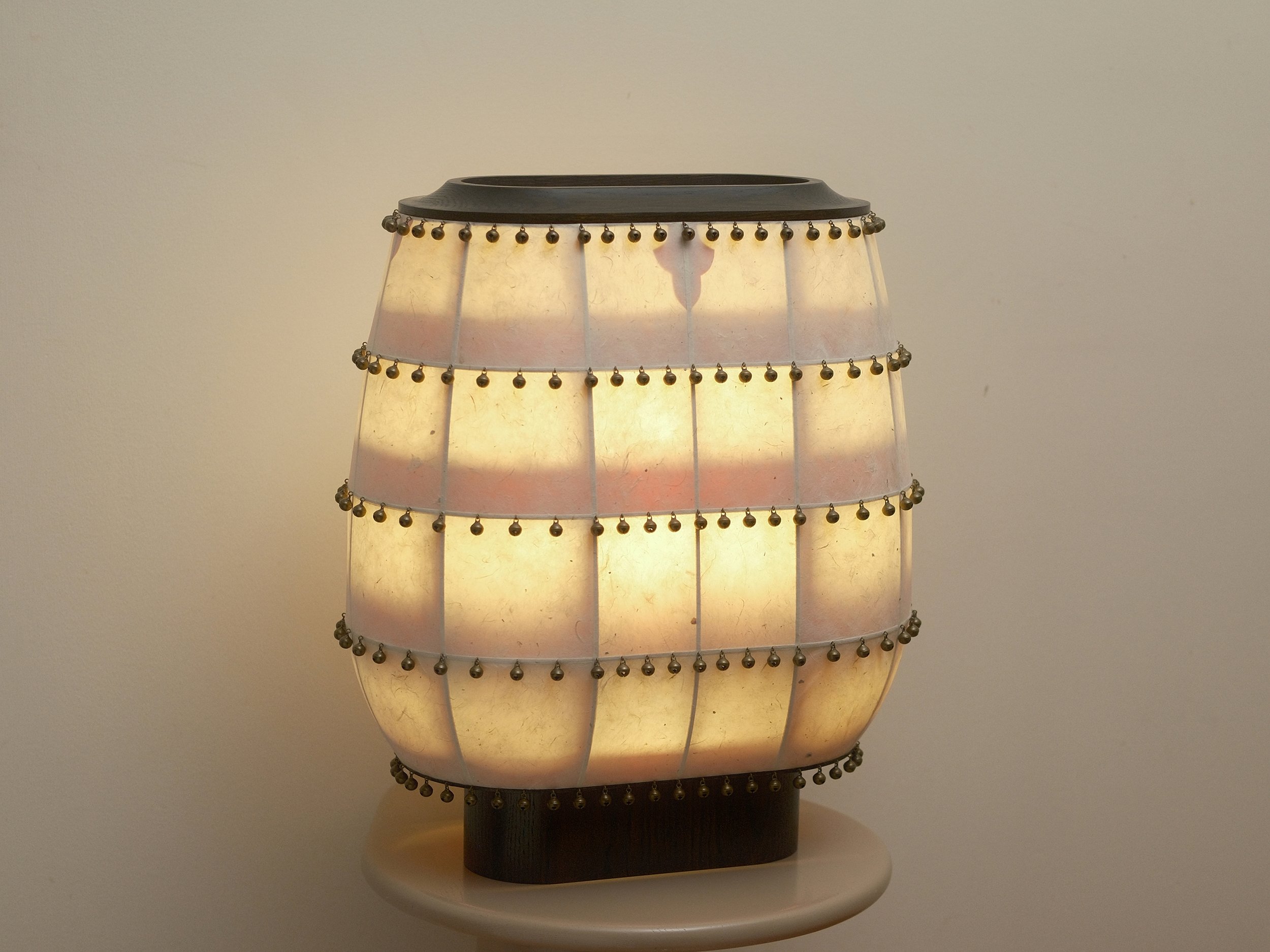
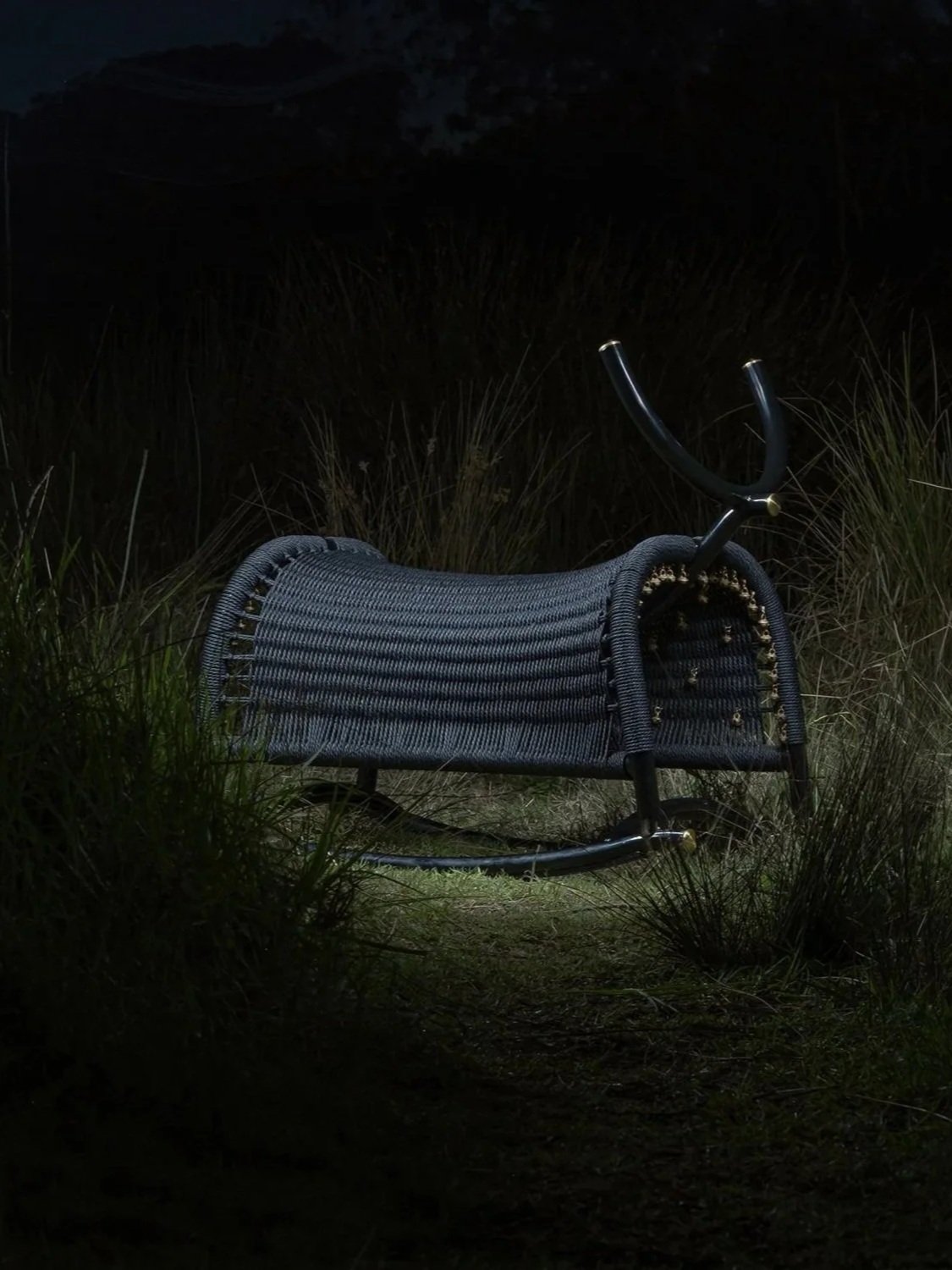
This series brings together two works, Nandi Unbound and the Loka Lamp, drawing on Indian mythology, folk traditions, and personal recollections. Both explore adornment and movement as expressions of the sacred. From the ornamentation of Hindu deities and temple sculptures to Theyyam dance of Northern Kerala, where the divine is invoked through elaborate costume and performance. These works reflect on how objects can embody reverence and bring a sense of the sacred into everyday life.
How important is the idea of storytelling in your work?
Narrative is often the starting point of my work. I'm interested in what an object communicates, the conversations it can initiate, and the reasons for its existence beyond pure function. Each piece carries a story shaped by my experiences and the way I see the world. For me, an object becomes a way of translating these ideas into physical form, inviting interpretation and engagement.
How do you decide what materials and details to add to each object?
Materials, techniques and details are chosen in response to the narrative, with each element contributing to the concept. In Nandi Unbound, the black frame and woven seat draw on the visual impression of the Nandi sculpture I encountered during a visit to Chamundi Hills in India. The brass details and bells reference the ornamentation of sacred sculptures and temple imagery, while the act of weaving introduces ideas of carrying, support and devotion. In Loka Lamp, Layers of Himalayan lokta paper creates a diffused glow, while the rows of ghungroo bells reference the adornment and movement of ritual dance.
There is an ongoing dialogue between material, process and form. Through experimentation, materials are pushed beyond their conventional uses, revealing unexpected qualities, from the subtle curves created by tension in the woven seat to the transformation of handmade paper into a three-dimensional form.
Is there a particular work in the exhibition that feels especially significant to you? Why?
Nandi Unbound is particularly significant because it bridges two distinct cultural relationships with cattle that I have experienced firsthand. Growing up in India, I was immersed in the sacred status of the bull in mythology and its historical importance in agrarian life. Later, living in Australia, I became fascinated by the sight of cattle roaming freely across open grasslands and along rural roadsides. The work emerged organically from the intersection of these two differing perspectives.
The making process was equally meaningful. Weaving the seat was physically demanding yet meditative. Incorporating the brass bells introduced a sense of ritual and adornment, much like dressing a sacred figure with jewellery. Meanwhile, the rocking movement gives the piece an unexpected playfulness, with the bells chiming softly with every motion.