
Five Minutes with... Bolaji Teniola

Image: Connor Patterson
At the core of Bolaji Teniola’s practice sits a focus on the dialogue between hand and material. Moved by a fascination with materiality, Teniola finds joy in allowing the process to unearth pragmatic solutions, leading to periods of process refinement, the honing of skills and material understanding. Working predominantly with materials generally regarded as lesser, Teniola aims not only to add value but also to present them in ways that showcase their viability for contemporary design.
Can you introduce yourself and your practice?
I’m Bolaji Teniola, a Naarm-based interdisciplinary designer and JamFactory alum with a creative practice spanning lighting, furniture, sculptural forms, and curation. At the core of my process-driven practice is a fascination with materiality and a commitment to elevating materials often regarded as lesser, and showcasing their viability for contemporary design.
What inspired this series of work?
I believe in being resourceful and finding ways to make the most of the materials we already have, as we operate in a world with finite resources. As I’ve become more conscious of my use of materials and want to develop better ways of working with timber in the way that I do, I created new iterations of my Daedalus Lamp, this time using a single length of pine, as an example of craft-based resourcefulness. This constraint helped me better understand the chosen material and be more conscientious about how I use it to achieve a desired result.
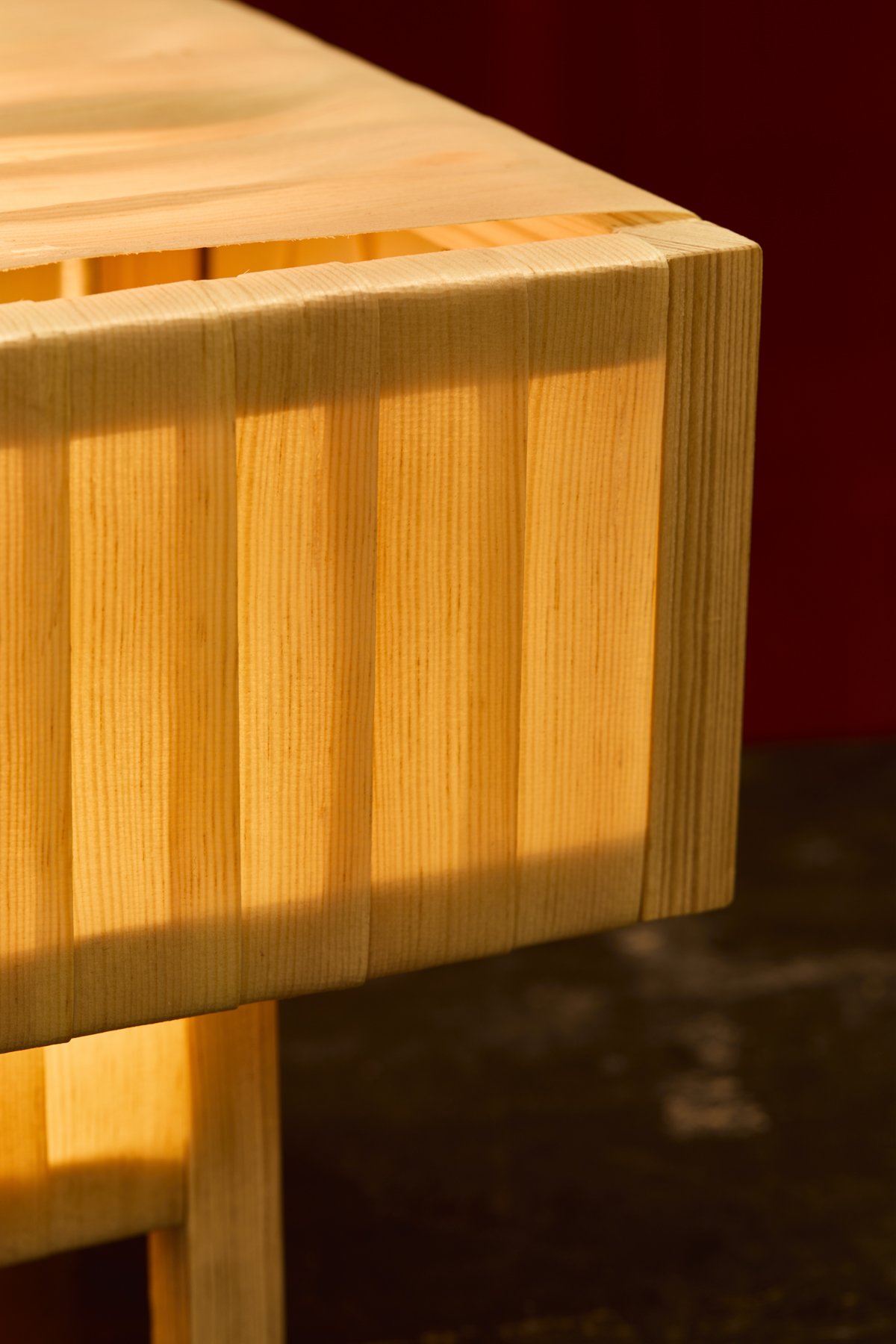
Image: Martina Gemmola
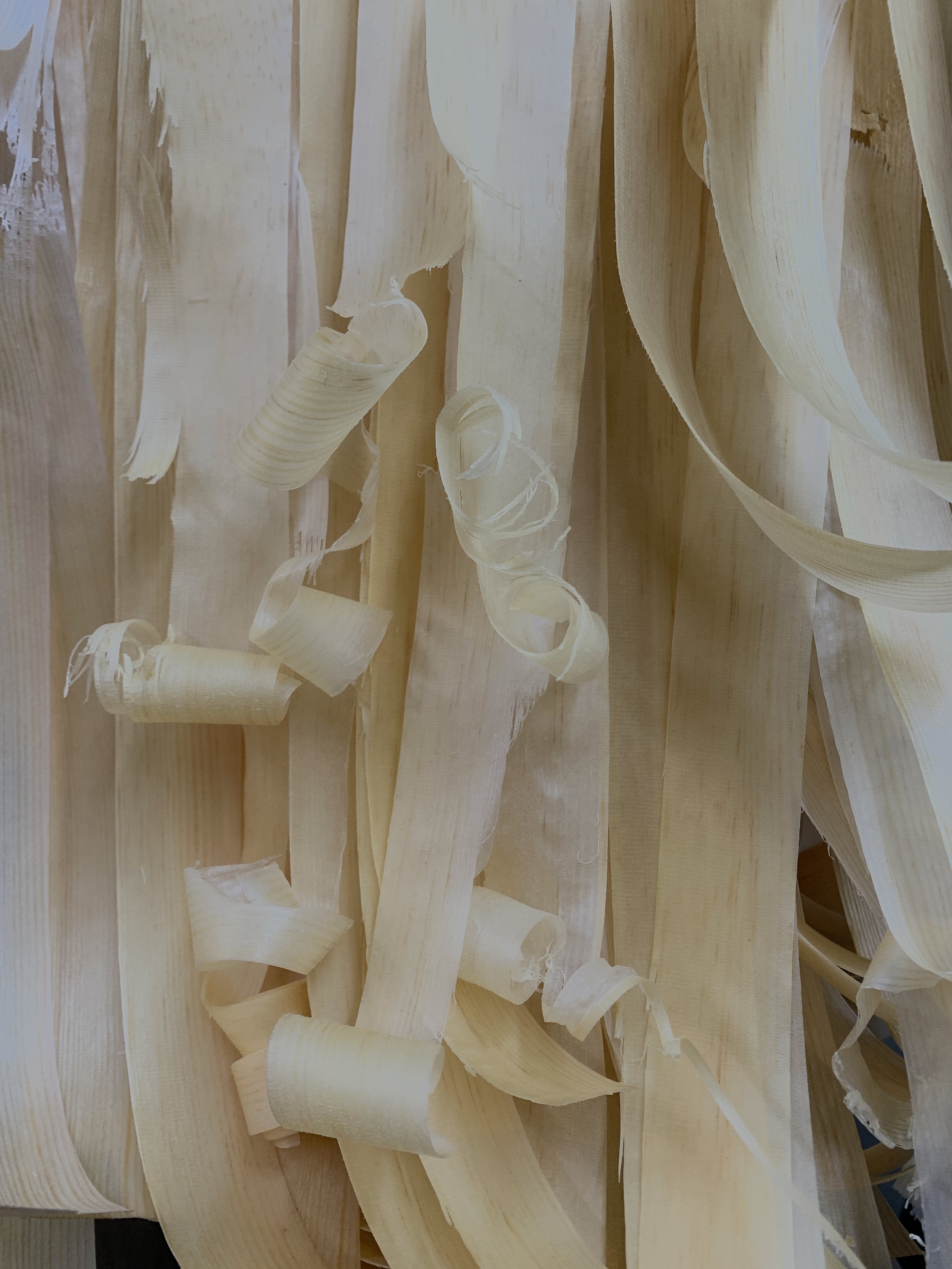
Image: courtesy of the artist
What interests you about working with waste and leftover timber?
I'm fascinated by the provenance of timber, the chance to continue its story through a new form, the challenge of working with a limited amount of material, and the opportunity to showcase the innate beauty of the timber offcuts I use.
What do you see in pine that others might overlook?
For the latest iteration of my Daedalus Lighting series, I chose to work with structural pine, a low-cost, readily accessible material commonly used for load-bearing applications such as wall and roof framing. Although often overlooked and seen as nothing more than cheap construction lumber, I found it quite striking after machining, and the hand-planned strands of pine I fashioned from the timber tend to perform better than expensive timber species in the same configuration.
How does the material change once it becomes a light?
The exquisite grain and warm tones of the pine are enhanced when illuminated, but what I find most captivating is its semi-translucent appearance when natural light passes through it during the day, thanks to its lighter hue, making each piece a beautiful luminous form even when not illuminated.