
Five Minutes with... Oliver Hyde
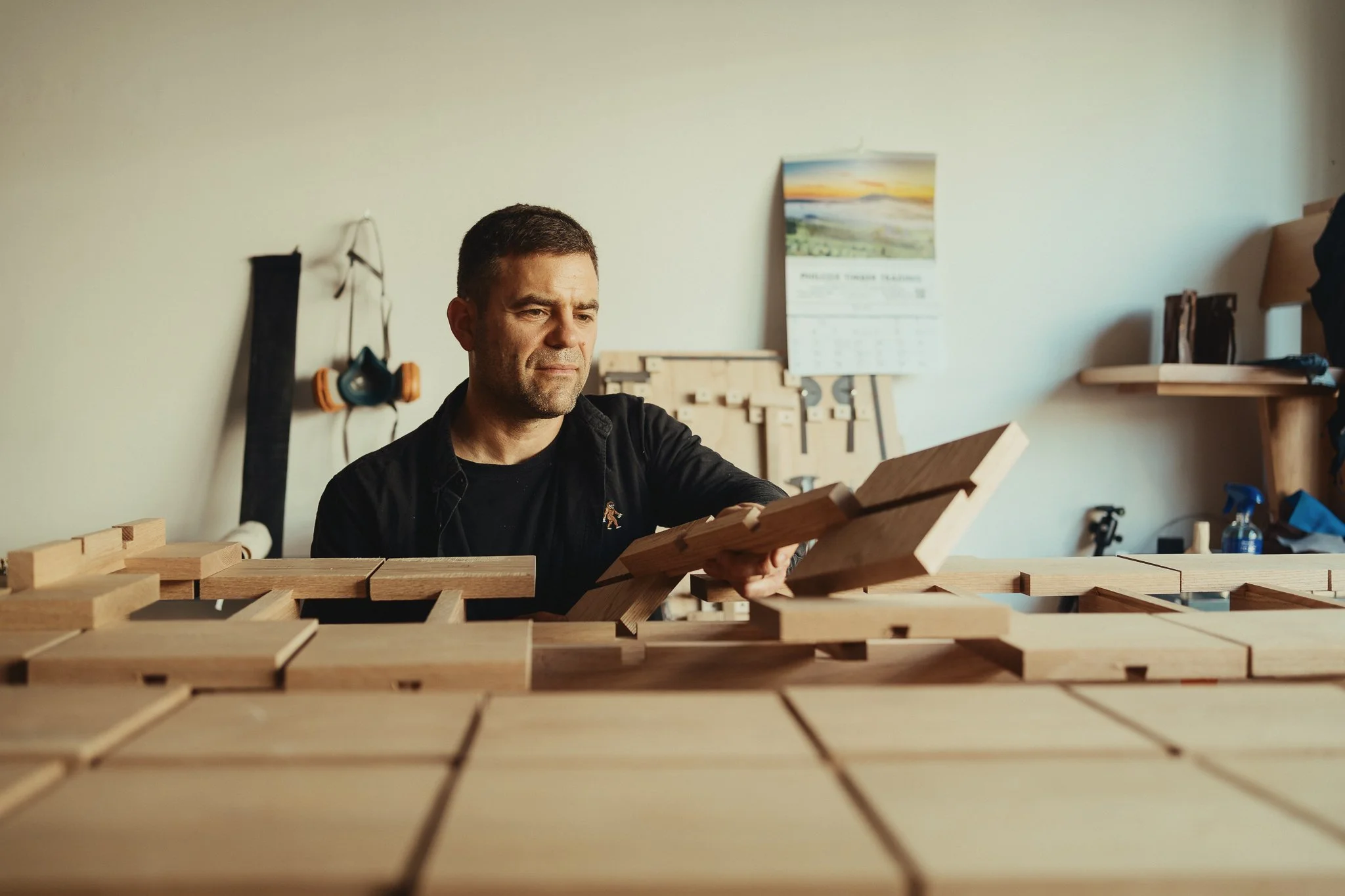
Image: Oliver Hyde in his JamFactory Studio, Photo: Connor Patterson
We speak with Second Year Furniture Associate Oliver Hyde about his practice, process and the ideas that shape his work. Based in Tarntanya (Adelaide), Oliver creates objects that explore how making, materiality and space intersect.
Can you tell us a little bit about yourself and your background?
Up until now I’ve been a bit of a jack of all trades. I undertook some training in making windows in Korea many moons ago and knew that’s what I wanted to spend my time doing. With some persistence, I find myself here as a Second Year Furniture Associate at JamFactory.
Your practice places a strong emphasis on process. Can you walk us through how a piece typically develops from initial idea to finished object?
Usually an idea comes from somewhere, and I most often start by sketching, and then move onto making things like making maquettes, doing test joints and prototyping before I make the final object.
How much does experimentation play a role in your studio practice?
Experimentation is significant in my practice as it allows me to test ideas before they make it into a product. This usually revolves around durability of construction and things like comfort, but I’m finding myself more drawn to material exploration and conceptual experimentation as I become more certain of my production methods.

Image: Oliver Hyde in his JamFactory Studio, Photo: Connor Patterson

Image: Oliver Hyde in his JamFactory Studio, Photo: Connor Patterson
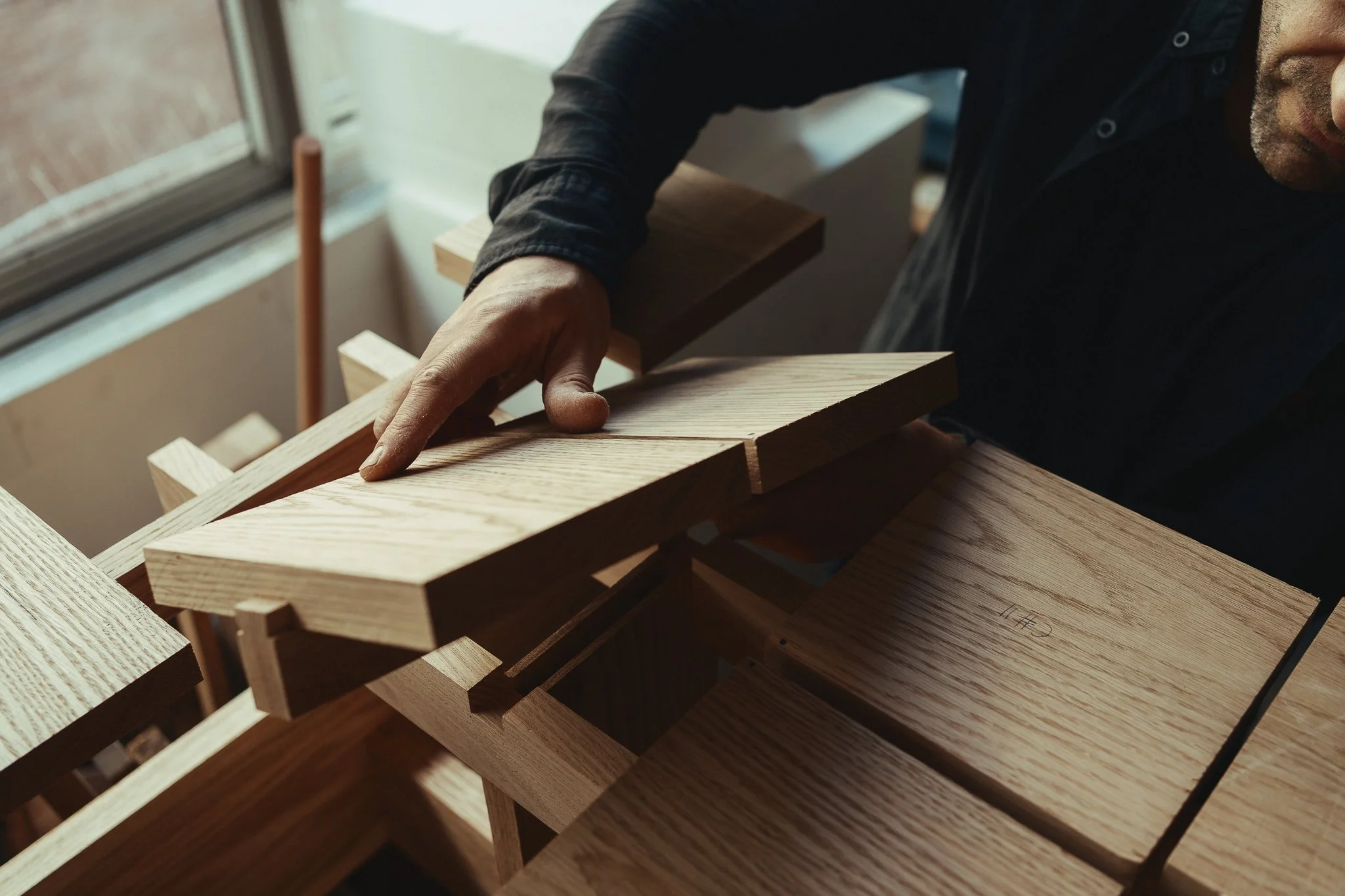
Image: Oliver Hyde in his JamFactory Studio, Photo: Connor Patterson
Are there any particular environments, architectures, cultures, or everyday moments that influence or inform the way you approach form and making?
Gosh! There’s so much in the world that I find inspiring. I think the lens that I look at it all through was acquired during previous studies in applied linguistics and my training in Korea, where the meanings, values and hierarchies expressed in the objects were all very much tied to the cultural values and beliefs.
What draws you to the materials you work with (timber but also any particular timber species you decide to use?), and what do they allow you to express that other materials might not?
My dad was a tree hugger (in the literal sense), so I was brought up with a certain reverence for timber/trees. The attention and consideration for the timber during my training further instilled this sense, and I suppose this may be why I typically try to let the material speak for itself in the way it is orientated and joined to form larger structures. I have a particular fondness for Tassie timbers, my maternal family’s home, especially celery top pine for its bold grain and the warmth that its colour expresses. I’m coming to believe that timber isn’t the best choice for all elements of a furniture piece, and don’t enjoy making it do as it wants to resist. For this and other conceptual reasons, I’ve been experimenting with incorporating other materials that you will see in future work of mine.
What techniques or methods are central to your making practice, and how have these evolved over time?
I started out with only a few simple tools: chisels, saws and planes. Aside from using these tools, marking out was always incredibly important as was sharpening. I intend to make sure that all of my work continues to involve some elements of these. However, with the volume of joinery I’ve been doing as of late, the router and jig making has become a necessary part of the process and one that I’m enjoying refining my skills in.
What are you working on currently?
I’m nearing completion of some benches for Mitico Cafe on Charles Street, CBD. Pas gave me complete creative freedom, so I went a bit crazy with a very joinery intensive design. I wanted to make something comfortable but not excessively so. Go enjoy a delicious cup of coffee and take a seat while you wait.

Image: Mitico Cafe Maquette Prototype, Photo: Connor Patterson